GRAIN
Twelve metal tines connect an acoustic pluck to an electronic texture.
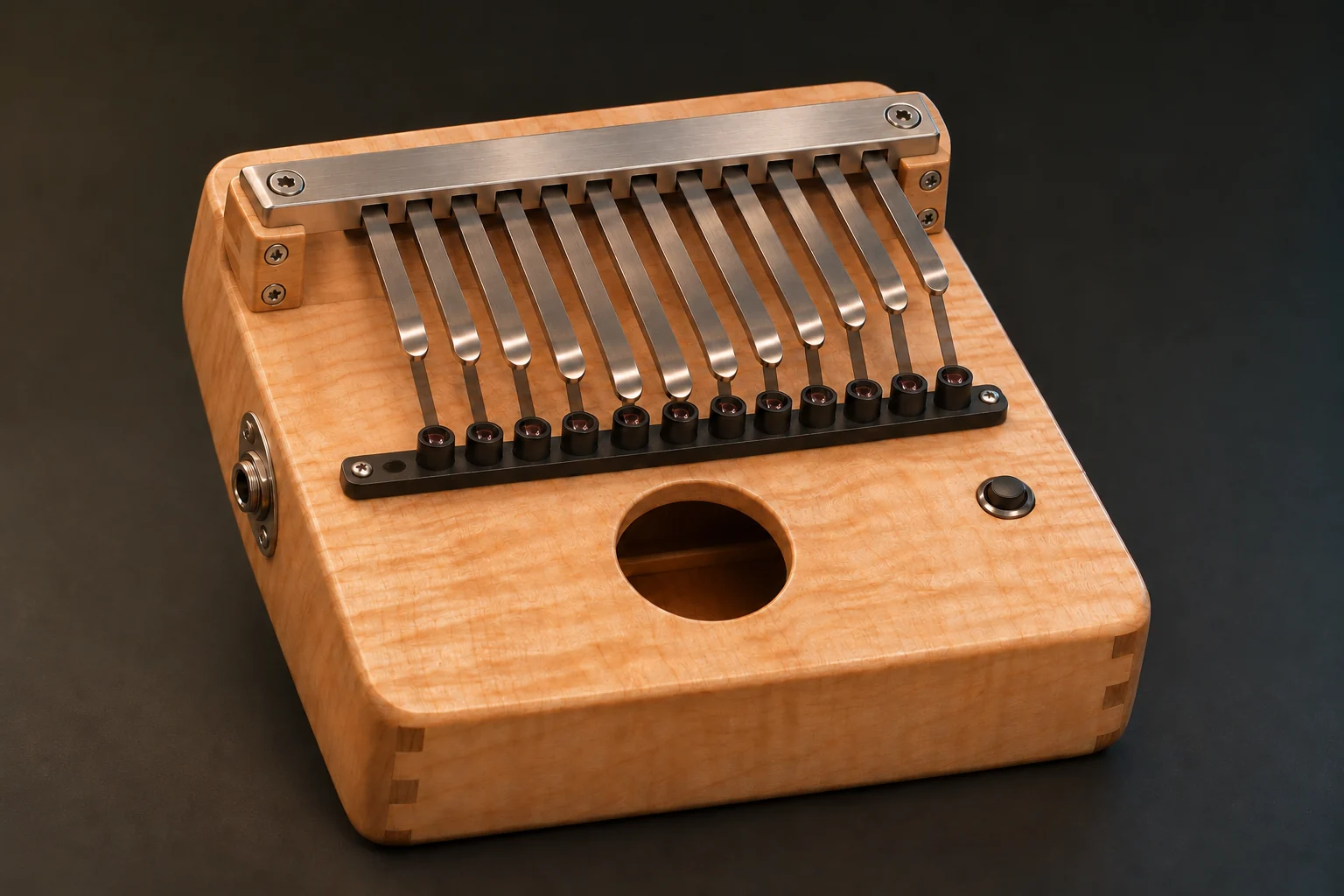
Studio visualization. Not to scale.
Where the sound begins.
Twelve spring-steel tines above a small wooden body. The design is based on the kalimba’s lamellophone mechanics, with reflective optical sensors in opaque sleeves beneath the tips.
A new degree of freedom.
Each optical channel measures changes in reflected light as its tine moves. Background calibration, AC-component extraction, and envelope tracking help distinguish a pluck from a finger slowly approaching. The electronics transmit an event and an estimate of relative intensity; a separate sensor picks up the body’s contact sound.
How to play it.
The thumbs play a short phrase while the electronics trigger associated granular layers. Damping a tine lowers its envelope; after a short hold period, the system ends the electronic voice. A separate mute command provides an immediate stop for all voices.
- Sonic character
- A short, clear pluck and controllable showers of particles.
- Materials
- Spring steel · maple · black polymer
Practical considerations.
Optics observe vibration, not the musician’s intention. Finger shadows and strong ambient light can alter the signal; a threshold with hysteresis rejects ambiguous events. The electronic tail’s ending depends on the envelope mapping. Recalibrate after retuning the tines.
Small batch.
Produced in batches of five. Tines, optical channels, and response mapping are adjusted individually for each instrument.
Contact the studio for the current configuration, instrument availability, and assembly schedule.
The story behind one design decision.
How can a kalimba pluck trigger electronic sound while preserving its acoustic response?
GRAIN’s optical channels track which tine is vibrating and how its motion decays. These data control the electronic layer, while a separate contact pickup captures the body’s sound. Each tine can be assigned an electronic note or a recorded fragment.
What changed in the design
Each channel has its own background reference and trigger threshold. Retriggering requires a fresh rise in the envelope, helping prevent unwanted notes near the threshold. Individual calibration makes responses more consistent across the tines and across instruments in a batch.
First study.
Three actions to hear the design at work and feel its limits.
Assign a short recording of a tine’s own pluck to that tine.
Increase the read-position spread in REGOLITH while keeping the density unchanged.
Alternate between natural decay, finger damping, and the global mute command.
Care and recalibration
Capture the background of all channels before playing under new lighting. Retuning the tines changes both their pitch and their distance from the optics. Recalculate thresholds after mechanical adjustment.
What the instrument record contains ↗